

04
Mar
Top Wildlife Experiences in South America
South American wildlife is often very colourful. It is also beautiful and diverse. ...
A Galapagos Islands cruise is so many things rolled into one – a relaxing holiday, an adventure, and foremost, a wildlife extravaganza. It truly is the experience of a lifetime, not only for birdwatchers or wildlife obsessives but for every traveller who has any interest in seeing the incredibly diverse and often unique species of birds, reptiles and mammals. The isolation of the islands and the minimal contact with humans has made the wildlife almost totally unafraid and allows visitors to see them at closer quarters.
We have created a dedicated Galapagos Cruise Travel Centre web site. Please click on the logo and you’ll be taken to this site. It’s all part of Tailor-Made Journeys / South America Travel Centre.

On a luxury or first-class Galapagos cruise you will visit many of the islands where you will participate in short walks, snorkelling, Zodiac (Panga) cruising and kayaking as well as visiting the Giant Tortoise Breeding Centre.
At South America Travel Centre we will create a unique, tailor-made itinerary specifically for you including a Galapagos Island cruise and any additional exploration in Ecuador that suits your interests. This may include the Amazon rainforest, the cloud forest or a perhaps trip down the avenue of the volcanoes. Our expert travel consultants have firsthand experience and will create the perfect Galapagos holiday for you and your travel companions.
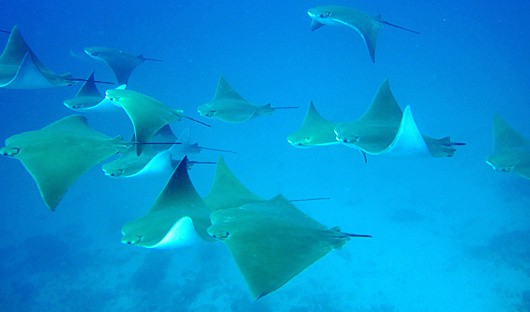
Snorkeling adds a whole new dimension to a visit to the Galapagos Islands. Whilst not everyone who visits may want to go snorkeling we suggest it’s definitely worth giving it a go. The guides (on the better boats) are experts themselves and also experts at helping guests to venture into the underwater world of the Galapagos, after all it is a Marine park – hence there’s a lot to see under the water. It’s possible to see three species or turtle, white-tipped reef sharks, manta rays, eagle rays, bottle-nosed dolphins, marine iguanas in addition to many species of reef fish.
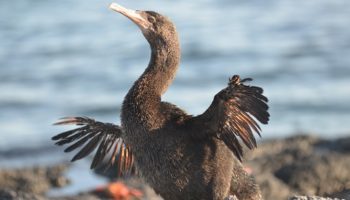
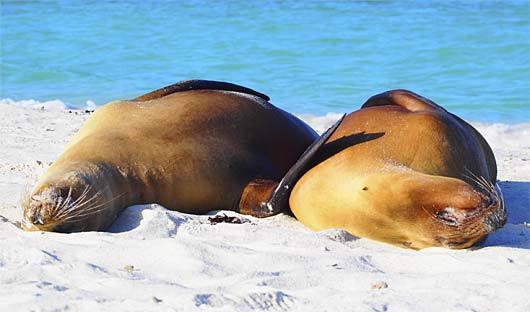
The Galapagos Islands are a wildlife paradise. Many species have no fear of humans as a result it is usually possible to get close to them and to take amazing photographs (please always follow the parks guidelines as well as the instructions of your National Park guide). Quite recently the guides have come up with the ‘Galapagos Big 15’ – they are; 1. blue-footed booby, 2. red-footed booby, 3. Nazca booby, 4. flightless cormorant, 5. America flamingo, 6 & 7. Great & Magnificent frigate birds, 8. Galapagos Hawk, 9. land iguana, 10. marine iguana, 11. Santa Fe Iguana, 12. Galapagos penguin, 13. Galapagos sea lion, 14. Galapagos fur seal and last but not least the 15. Galapagos Giant tortoise. Then there are 13 species of Darwin’s finches and other birds species, too numerous to list here
Most voyages over 5 nights in duration will see most of the above species. The more difficult (site dependent) species are; waved albatross, flightless cormorant, Santa Fe Iguana and Galapagos penguin. Please tell us if you have specific interests as we can ensure the selected voyage visits appropriate sites.
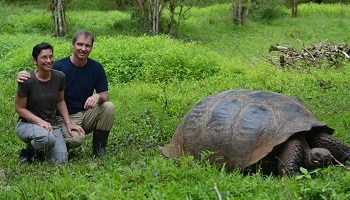
Sadly the most famous giant tortoise, Lonesome George, died in 2012 before it was possible to find a female of the same sub-species of tortoise (Pinta) for him to mate with. The good news is that Galapagos giant tortoise numbers are increasing and can now be seen on several islands with Santa Cruz offering the best opportunities. Recent work on removing feral goats and pigs (both of which would dig up nests of eggs to eat) has been extremely successful as have captive breeding programmes; who’s work can be seen at the Charles Darwin Research Centre.
The Galapagos giant tortoise now represent one of the remaining two groups of giant tortoises in the entire world — the other group living on Aldabra Atoll in the Indian Ocean.
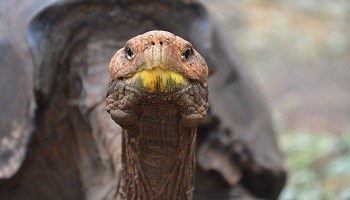
In 1959 Charles Darwin Foundation for the Galapagos Islands created and Galapagos National Park (GNP) established. Five years later in 1964 Charles Darwin Research Station was established in Puerto Ayora, Santa Cruz Island, Galapagos. Invasive species are the number one threat to Galapagos ecosystems and biodiversity. Significant work to remove feral goats and pigs have been particularly successful in helping giant tortoise numbers recover on some islands.
A visit to the research centre will allow you to see several sub-species of giant tortoise that developed in isolation of one another on specific islands with particular habitat that led to changes in their shells and necks – clear demonstrations of evolution – made famous by Charles Darwin. There are also many hundreds of young tortoises bred for future release.
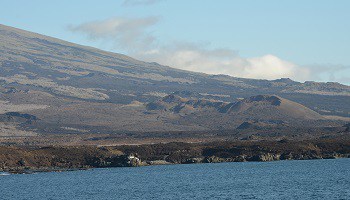
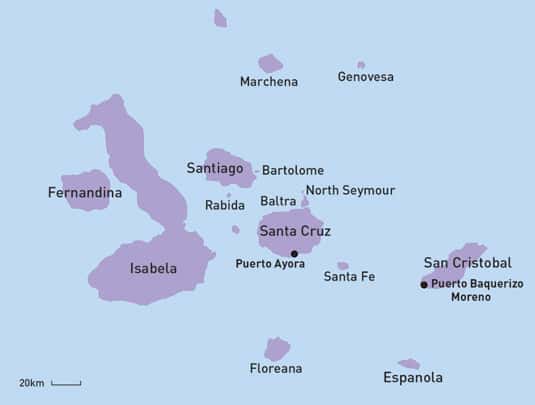
The largest (4,588 sq.km and 100km long) and one of the youngest of the Galapagos Islands, Isabela was formed by six independent volcanoes that came together – five are still active, making it one of the most volcanically active places on earth. Aside from the geological interest for which it is famous, Isabela is rich with bird (including flightless cormorants and galapagos penguins), animal and marine life and is home to more wild giant tortoises than all the other islands. Its large size and the lava flows and other obstacles created barriers that the slow-moving tortoises were unable to cross, causing several different sub-species of tortoise to develop. The island was also a favourite hideaway for early pirates, buccaneers and whalers, and at Tagus Cove you will see the names of hundreds of ships painted on the high ridge, a practice dating back to the 1800s and now forbidden.
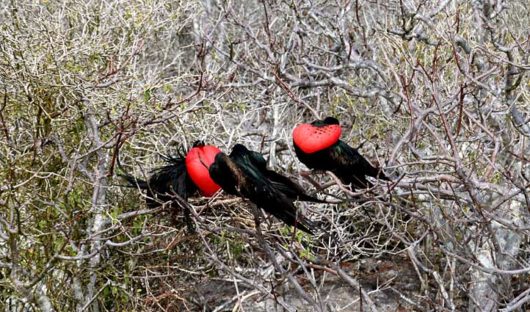
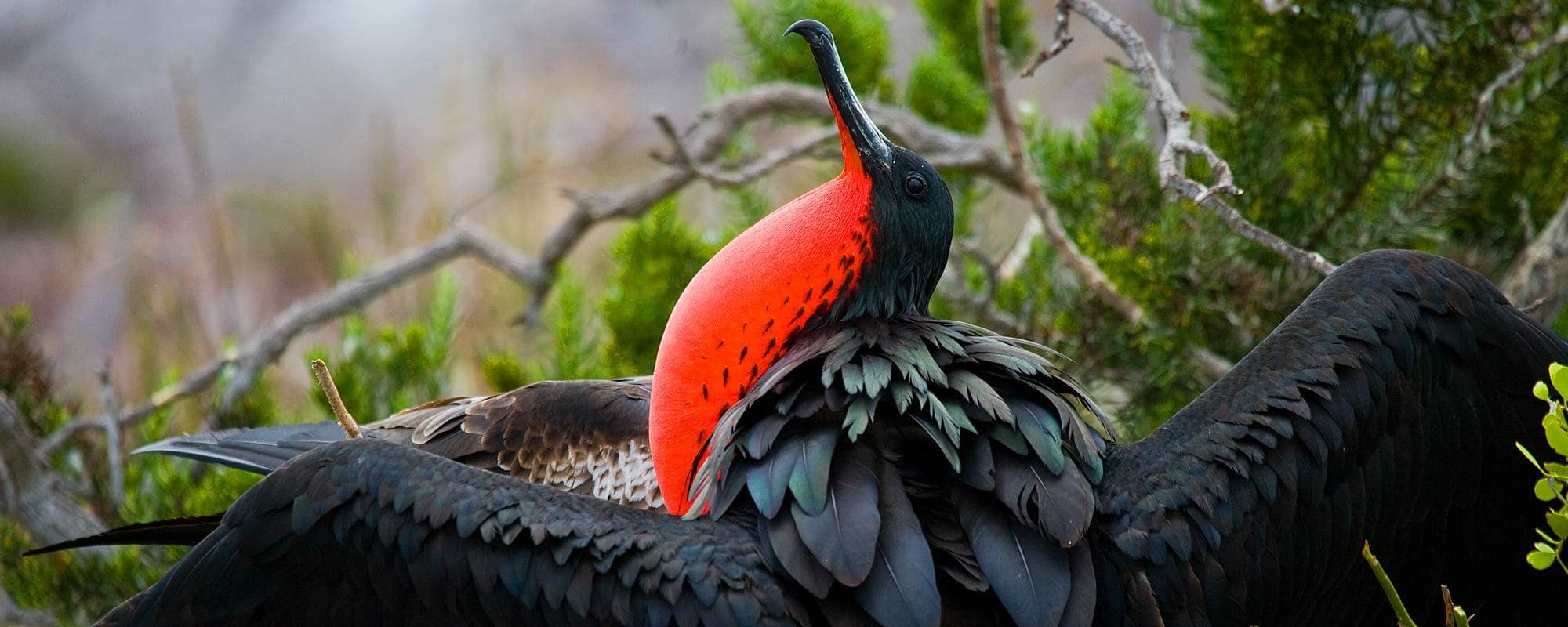
Genovesa Island is the northern most island in the Galapagos archipelago, famous for an abundance of bird life. This island is is a shield volcano in which part of the caldera wall has collapsed creating Darwin Bay. Genovesa Island is famous for the courting frigate birds who nest on this island and the males inflate their bright red throat pouches to impress a female. Other birdspecies found on this island include: Red footed boobies, blue footed boobies, Nazca boobies, storm petrels, short eared owls, and many more. Here you will also find seals as well as Galapagos sharks.
This is one of the islands where you will observe the highest proportion of endemic species in the Galapagos. You will be noisily greeted by sea lions when you land on their beach at Punta Suarez, while curious mockingbirds peck at your shoelaces. Colonies of blue-footed boobies engage in ‘sky-pointing’ to show off for potential mates; swallow-tailed gulls and red-billed tropicbirds take shelter under the cliffs, and you will also find Darwin’s finches, Galapagos doves and Galapagos hawks. And only here you will see a species of marine iguana identified with traces of red and green colouring (nicknamed, for obvious reasons, Christmas iguanas!)
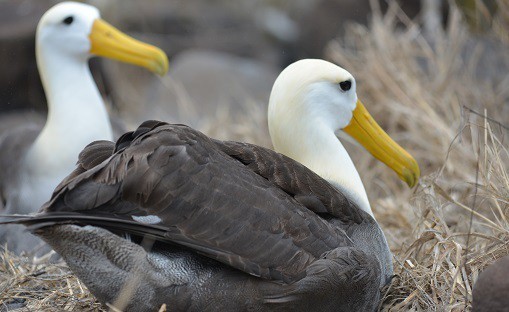
Espanola is also home to the waved albatross. This critically endangered species breeds mainly on Espanola Island and the major cause of its decline continues to be long-line fishing. The courtship of the waved albatross is a spectacular sight and usually takes place in March & April. It includes rapid bill circling and bowing, beak clacking, and an upraised bill to make a “whoo hoo” sound. The waved albatross head out to sea in December and don’t return until February.

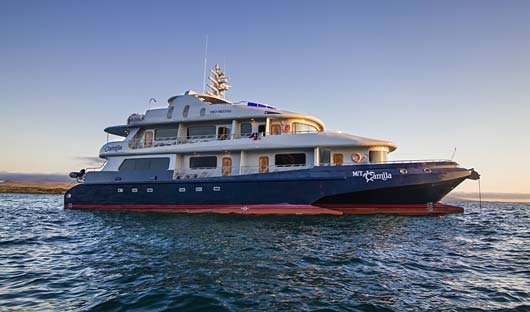
Exploring the Galapagos by boat is the perfect way to make the most of your time in this unique archipelago. The boats are comfortable and vary in standard from Luxury and First Class to Tourist Superior. Each day you explore new islands and the boat re-positions while you sleep at night to ensure you explore as much of the islands as time allows. All the vessels we recommend have at least 1 naturalist guide onboard with (1 guide to every 16 passengers) to give you the best wildlife experience and gain knowledge on this unique place.
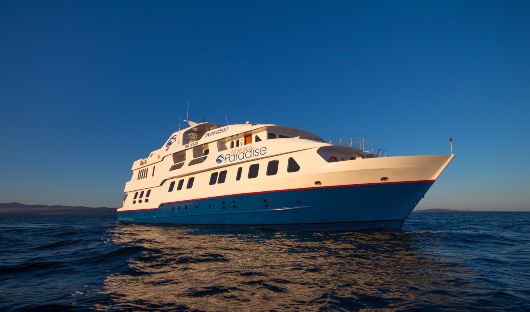
Top class design and the finest facilities combine with excellent guides and crew. Ideal for those who prefer a more intimate experience as well as the ability to disembark the entire group quickly to explore the Galapagos. As is the case with all of the better vessels, they attract the best guides.

A perfect alternative to a larger ship with many of the benefits: large comfortable cabins, excellent guides, and great cuisine. These vessels have a good guide to passenger ratio so guests can get off the boat quickly to maximise exploration and activities.
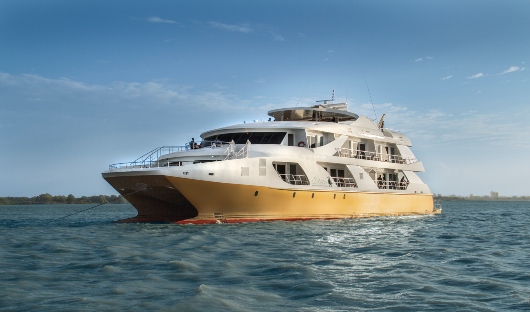
Exquisite boats combined with excellent naturalist guides and crew. The smaller luxury vessels are ideal for a more intimate experience. Exceptional cuisine is served onboard and the facilities are deluxe.
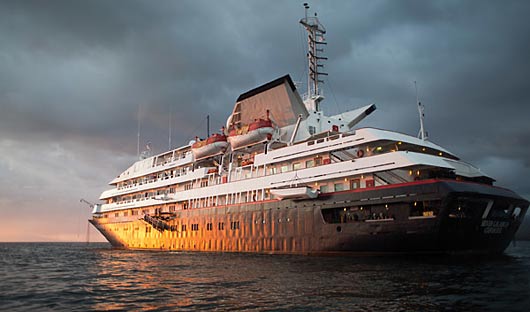
The larger luxury boats offer many onboard facilities along with plenty of space and a high level of comfort and stability. Excellent naturalist guides and crew, and a team of chefs preparing delicious cuisine.
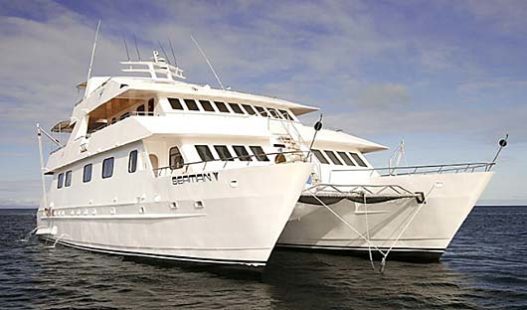
A good and comfortable option to explore the Galapagos Islands. The cabins, while slightly smaller, all have clean standard facilities like private bathrooms, air-conditioning and hot water.
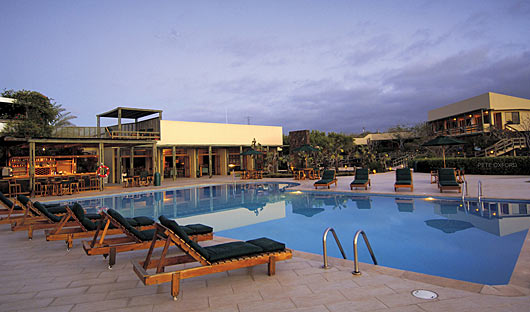
If you are not much of a sailor, there are a small number of high quality hotels that offer a bed that doesn’t move and day trips to nearby islands. Another popular option is to add a few nights at a hotel at the end of a cruise – quite literally the best of both worlds.
South America Travel Centre can look after all aspects of your holiday, including flights and travel insurance.
We start by asking you what your interests are and where you are interested in, when, for how long, what standard and style of accommodation (it can be a combination – for example you may wish to celebrate a special occasion while you’re away by staying in a very special property or place). Once we have a good understanding of just what you’re looking for, we can begin to create a holiday to meet your time and budget requirements and, most importantly, that will deliver interest and enjoyment in an experience to exceed your expectations.
Please book early. Many of the hotels, lodges and cruise vessels we recommend are relatively small. For example, the Petrel accommodates just 16 guests. This exclusivity combined with high demand means they can be booked out up to 6-8 months in advance.
If you’re thinking of travelling during any major holidays like Christmas, New Year and Easter, or during any festivals, our advice is simply to book as early as you can, even 12 months or more, and we can add flights as soon as they become available.
Australian citizens do not require a visa to enter Ecuador or the Galapagos Islands. You will be required to pay entrance into the Galapagos National Park (US$100). You will need to hold a valid passport and have a return ticket when you arrival.
It is strongly recommended that all travellers to Ecuador be vaccinated for yellow fever before commencing their trip.
Vaccinations are advised for common diseases like Hepatitis A and B, Typhoid as well as Influenza.
There are no compulsory vaccinations.
We advise you to consult a Travel Doctor specialist prior to departure to assess any health risks in relation to your medical history and travel plans.
We have access to a wide range of airfares and have excellent relationships with our key airline partners. Our two main airline partners in Latin America are LATAM Airlines, QANTAS Airlines and Air New Zealand. We can also arrange internal flights for you within Latin America.
Flights from Quito or Guayaquil (Ecuador) to the Galapagos Islands are usually booked by the ship operator (to ensure all guest arrive on the same flight).
Irrespective of whether you book directly with us or with your preferred travel agent, we’ll request the details of all of your fights to ensure if there are any changes your transfers and other arrangements are adjusted accordingly.
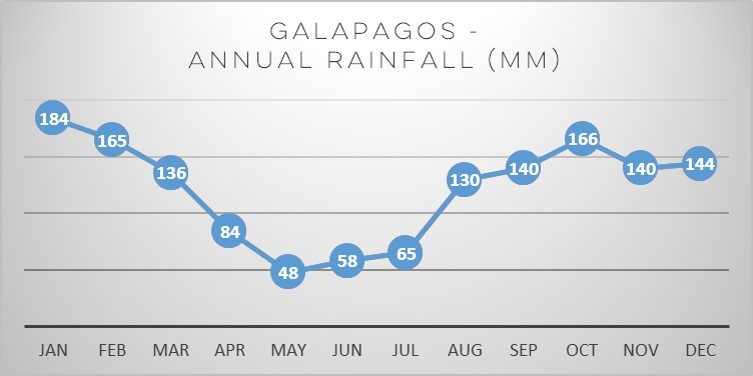
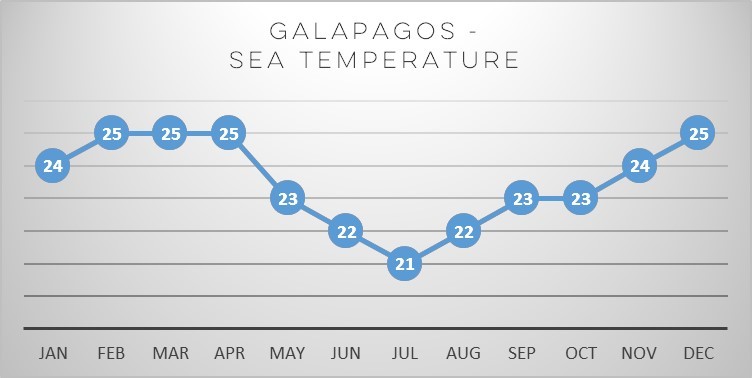
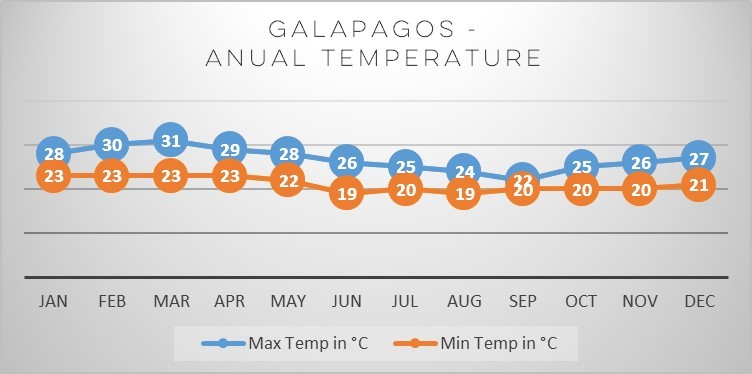
Year-round. Despite their sub-tropical location on the equator, the cold waters of the Humboldt Current surround the islands keeping temperatures pleasant.
The Galapagos has two main seasons:
December to June – warm (becoming hot and humid January to March)
July to November – more wind, cooler, mainly dry, with some misty drizzle

South American wildlife is often very colourful. It is also beautiful and diverse. ...
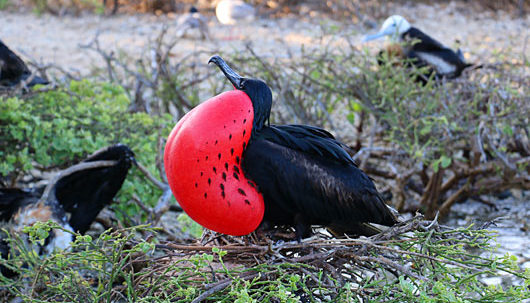
Genovesa Island is a shield volcano in the Galapagos archipelago, famous for an abundance of bird life. On a recent visit to the island Fiona finds out first hand the main attraction of the island. Find out how to get there and what you will see....
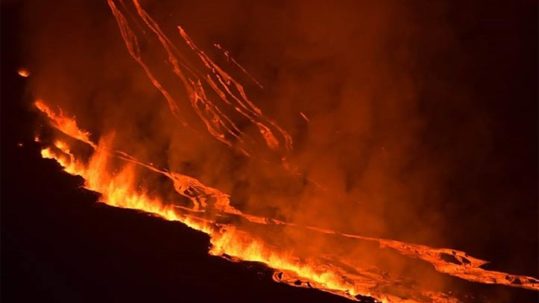
Fernandina Island, which is an active Shield Volcano, was impressing its visitors recently with a volcanic eruption over the North-Western side of the island. The flowing lava is a fascinating site to see for any guest to the Galapagos and below are some pictures that were captured by guests and staff onboard the La Pinta....
Now back in Sydney after a wonderful holiday. The EcoCamp was also fantastic! The whole holiday was co-ordinated beautifully – everything just flowed from one adventure to the next without a single problem. We now have 100’s and 100’s of absolutely spectacular photos to sort through. Interestedly we had 8 different flights whilst we were away and each one of them was either full or nearly full – people are obviously travelling again. Thank you so much for all your assistance in co-ordinating our Patagonia experience. With Kindest regards Joe & Judy
Joe & Judy
Now back in Sydney after a wonderful holiday. The EcoCamp was also fantastic! The whole holiday was co-ordinated beautifully – everything just flowed from one adventure to the next without a single problem. We now have 100’s and 100’s of absolutely spectacular photos to sort through. Interestedly we had 8 different flights whilst we were away and each one of them was either full or nearly full – people are obviously travelling again. Thank you so much for all your assistance in co-ordinating our Patagonia experience. With Kindest regards, Joe & Judy
Joe & Judy Chile February 2023
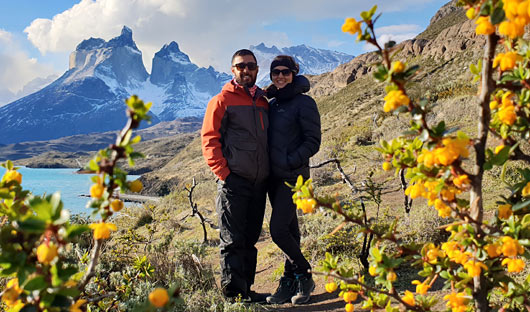
We cannot recommend Hayley from South America Travel Centre (SATC) more highly. Our entire trip was planned perfectly from the second we left Sydney. Not only did she incorporate all of our preferred destinations, Hayley also made suggestions on additional places based on our preferences and some of these turned out to be the highlights of our trip! We tend to be more independent travellers and Hayley was able to create the perfect mix of seamless travel with the flexibility for us throughout the journey to take advantage of any unexpected opportunities that arose. The guides at every location were extremely knowledgeable and offered excellent suggestions on everything from safety through to restaurants and laundry locations. I absolutely cannot fault the services provided both locally and in Australia from the SATC team.
Aimee Hudspeth and Shane R (Peru, Argentina and Chile)